Loading LOKEIL Renovation…
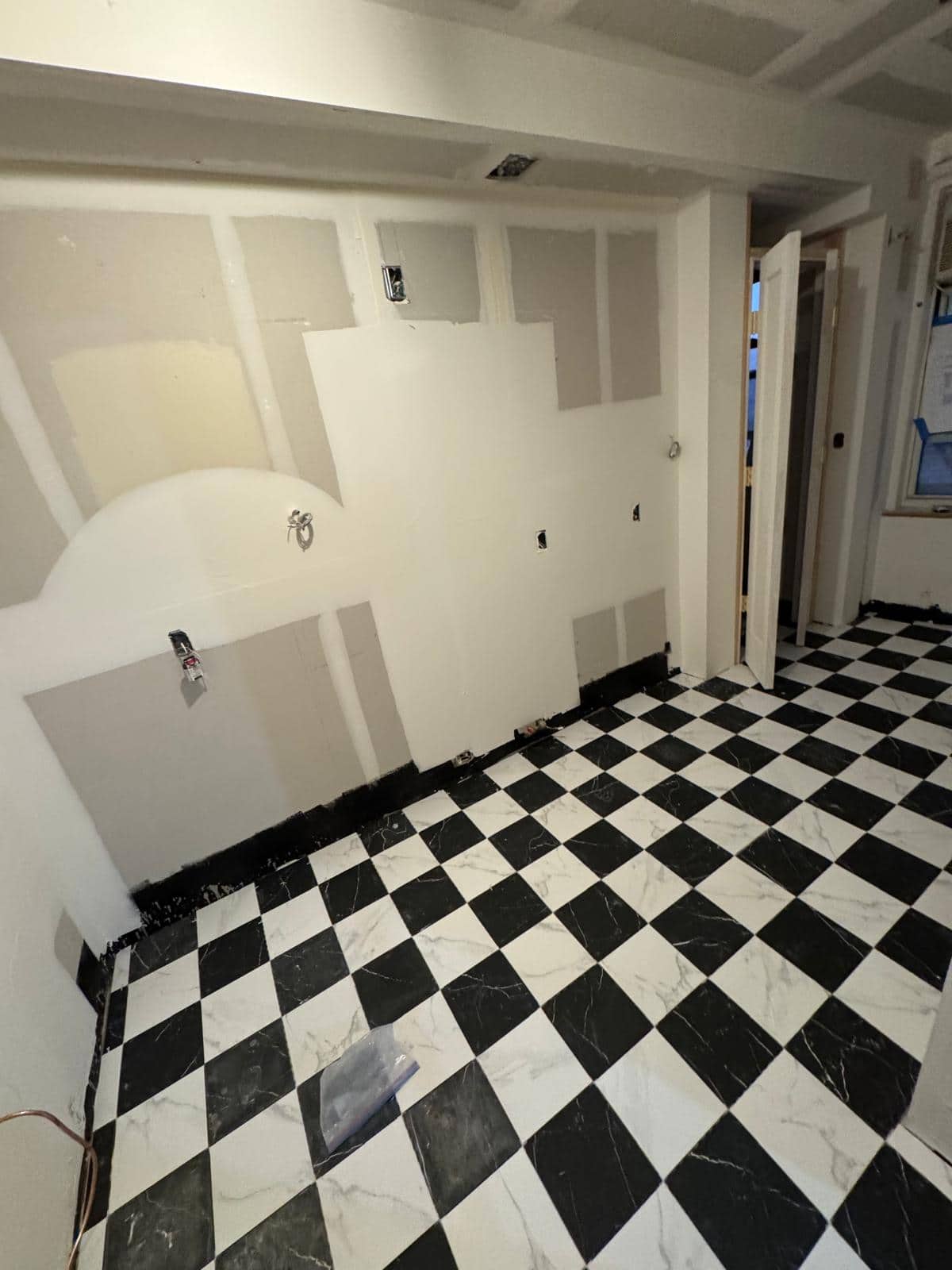
Checkerboard tile makes every wall angle visible, so the starting grid matters.
The grid against imperfect walls
Black and white squares give this unfinished room a clear graphic floor. The bare surrounding walls reveal why it is worth checking the pattern before fixtures and trim hide its edges.
Checkerboard tile brings a strong grid into a room whose walls may not be perfectly square. That can make a small out of square condition more visible than it would be with a quiet floor. A dry layout lets you decide where to absorb the difference. The doorway and the longest sight line usually deserve the most attention.
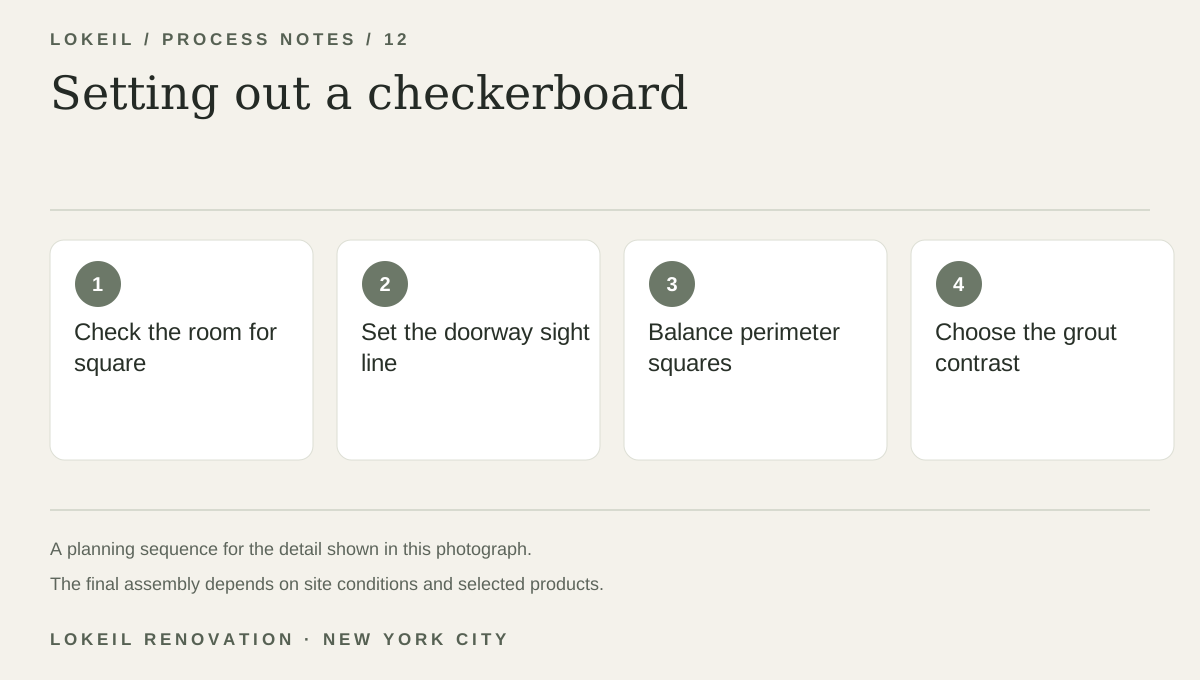
Setting out a checkerboard
- 1Check the room for square
- 2Set the doorway sight line
- 3Balance perimeter squares
- 4Choose the grout contrast
Dry lay before fixing tile
Checkered tile needs a center line and a decision about how the squares meet each wall. Subfloor preparation and floor height matter just as much as the pattern. At the end, grout color can either soften the grid or make it more prominent.
Decide what the doorway should show
If you want a checkerboard floor, share the tile dimensions and a photo from the doorway. Ask to review the proposed border cuts, grout color, and transition to the next room before installation.