Lower East Side · Manhattan
Before Replacing a Damp Bathroom Wall on the Lower East Side
Lower East Side bathroom wall repairs: record when moisture appears, assess its source, and define the repair before choosing paint or tile.
4 min read · Updated · By LOKEIL Renovation
Plan a similar project →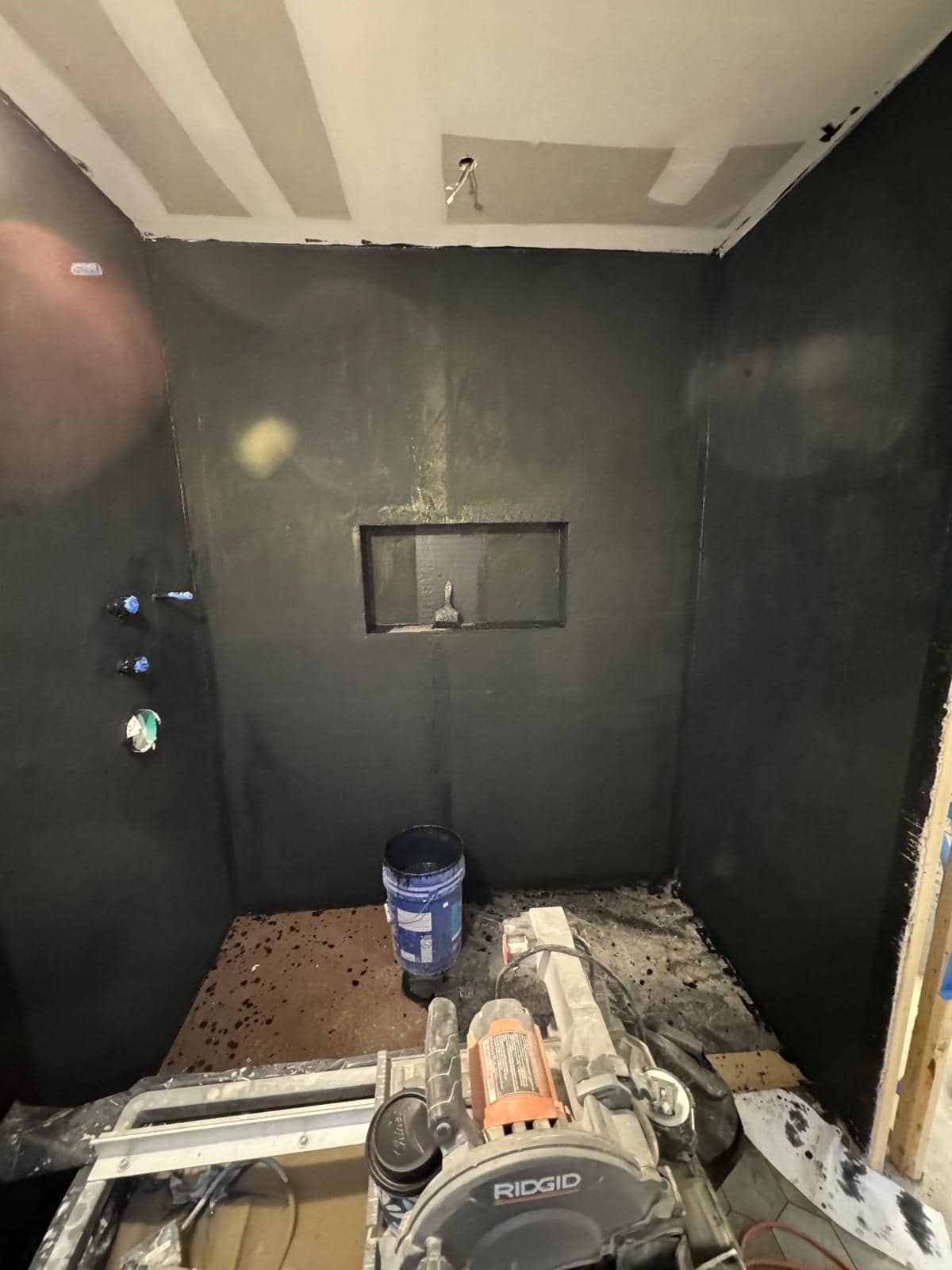
The same patch of bathroom wall keeps spoiling the paint. You can describe the color you want, but the more useful detail for a repair estimate is when that patch changes: after a shower, after rain, or even when the room has not been used.
This LOKEIL photograph catches a shower before tile covers the walls. A dark coating, niche, plumbing openings, and unfinished ceiling are visible. It is a useful reminder for a Lower East Side property owner: the finish you see and the work behind it are separate parts of the conversation. The photograph does not diagnose a moisture problem or identify the coating product.
A recurring wall mark needs a condition assessment before a new finish.
Keep a short record before requesting a finish
Take one wide photograph to show the wall in relation to the shower, window, ceiling, and neighboring room. Then take a closer view of the affected finish. Record what was happening when you noticed it and whether the mark changes between uses. Include earlier repairs if you know about them.
Describe observations rather than naming a cause. A patch near plumbing, droplets after bathing, and a mark that changes after rain lead to different inspection questions. None establishes the source by itself. If another apartment or a shared building surface may be involved, include the building contact in the assessment conversation.
- Where does the change appear?
- When do you first notice it, and does it remain?
- Has the same area already been repaired or repainted?
- What is directly beside, above, or behind that part of the room?
Separate the source from the damaged surface
An estimate should explain who assesses the source, what that assessment covers, and how its findings affect the wall work. Plumbing, ventilation, the shower assembly, and exterior or shared building conditions may require different people. Ask which part LOKEIL is pricing and which part needs the responsible trade or building representative.
EPA guidance puts moisture control ahead of covering a moldy surface with paint. Where mold is present, it advises cleaning and drying before painting and addressing water problems. That guidance is a reason to resolve the condition first, not evidence that the wall in this photograph has mold.
A closer look
Follow the condition before the color
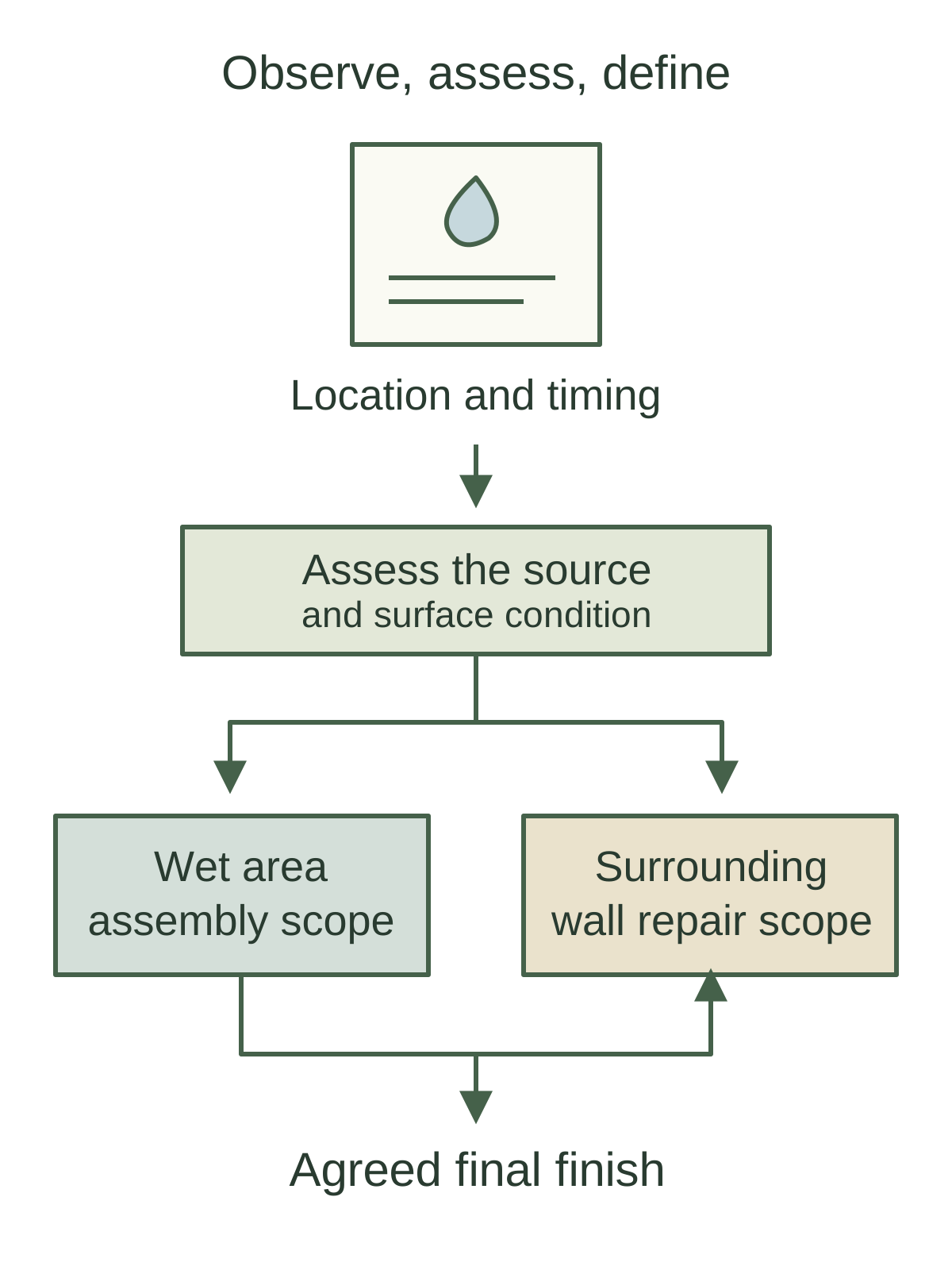
- Record the location, timing, and previous repairs.
- Agree who assesses the moisture source and surface condition.
- Define the affected assembly and finish boundaries before covering them.
A shower repair needs an assembly scope
If the proposed work opens a tiled wet area, ask what will be assessed behind the finish and which waterproofing system the repair will use. The niche, corners, plumbing openings, and connection to the shower base belong in that scope. A promise to add sealer does not describe all of those connections.
Schluter’s shower guidance distinguishes the tile covering from the moisture management assembly beneath it. Its products are one system example; this photograph does not identify them. Ask for the actual specified products, compatible components, installation requirements, and any required checks before the work is concealed. A dark surface alone cannot prove coverage, thickness, curing, or testing.
Decide what the wall repair includes
Once the source and surface condition have been assessed, agree which materials stay and which are removed or repaired. Put the wall, ceiling, tile edges, and neighboring finishes on the same scope sketch. The unfinished ceiling in this photo makes that boundary easy to see.
A repair patch and a repainted wall are different quantities of work. Ask where the new finish stops, what protection and cleanup are included, and how discoveries during opening will be discussed before additional work proceeds. Choose the decorative finish after those boundaries are clear.
Keep the assessment with the finished result
Retain the agreed scope, product information where relevant, and progress photographs supplied during the work. Ask what care or follow up the responsible installer recommends. Those records are more useful if the same area changes again than a close photograph of fresh paint alone.
Your first brief can be simple: the affected location, a few observations, earlier repair history, and the finish you hope to restore. It gives the assessment a starting point without committing to a cosmetic repair before the condition is understood.
Choose a starting point
An unexplained recurring mark
Begin with observations and assessment of the source before defining the surface repair.
A condition already assessed
Share the findings and agree the affected assembly, repair boundaries, and final finish.
Your room, your next step
Discuss a Lower East Side bathroom wall repair
Prepare a short brief, then open it in your email app. Add room photos and any building requirements before sending to LOKEIL.
Preview your email brief
Hello LOKEIL, Project neighborhood: Lower East Side, Manhattan I am a: Homeowner Building type: Apartment / condo / co-op Work I am considering: Observed moisture history, responsible source assessment, affected shower or wall assembly, and finish repair boundaries Timing: Exploring the scope Best number to reach me: Room conditions / building access / questions: I can attach current room photos, approximate measurements, and building requirements before sending. Article I read: https://lokeilremodeling.com/blog/black-waterproofing-coating-before-shower-tile
This prepares an email draft. LOKEIL receives your brief only when you send it. Prefer webmail? Copy the preview and email info@lokeilremodeling.com.